
A legal response to an exceptional situation
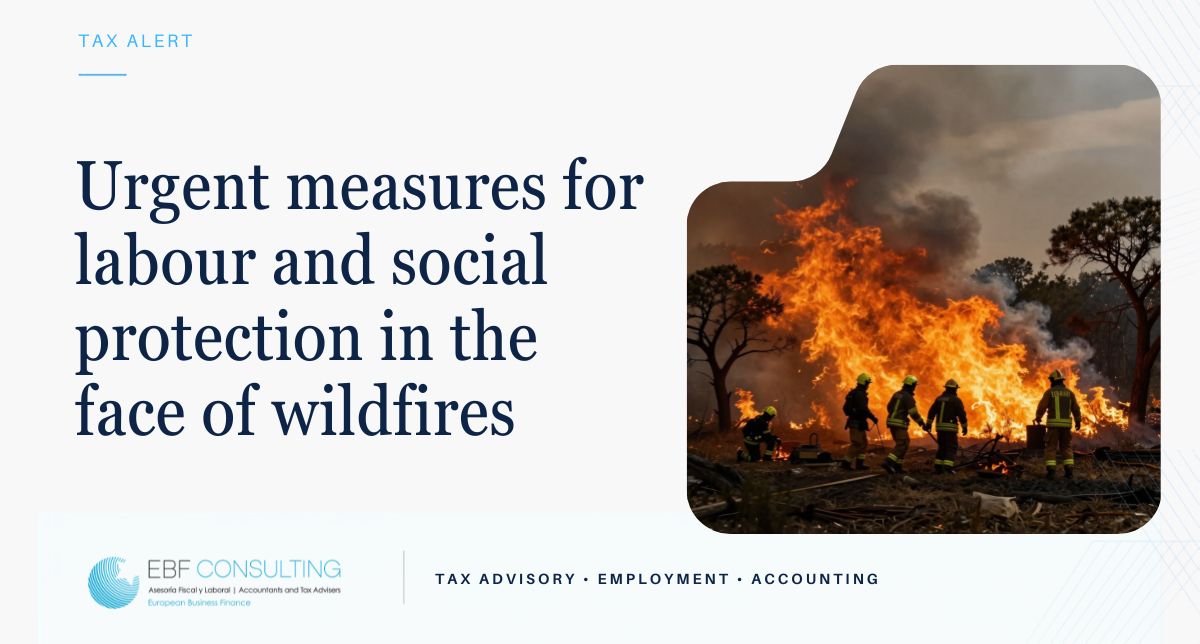
The wildfires that this summer have forced evacuations, confinements and access restrictions across several areas of Spain have also triggered a legislative response. On 30 July 2026, Royal Decree-Law 20/2026 of 29 July was published in the Official State Gazette (BOE), establishing urgent measures for labour and social protection in the face of wildfires. Alongside a broad package of employment, Social Security and notarial/registry measures, the rule introduces a series of procedural and insolvency measures designed to ease the burden on those directly affected.
Suspension of procedural and limitation periods
The most immediate measure is the suspension of procedural terms and the suspension and interruption of procedural deadlines, across all jurisdictional orders, for courts based in the judicial districts of Ávila, Arenas de San Pedro, Talavera de la Reina, Torrijos, Navalcarnero, San Lorenzo de El Escorial and Nules. The suspension covers the period from 27 to 31 July 2026, both inclusive, with exceptions for actions that cannot be delayed (habeas corpus proceedings, duty services, detained persons, protection orders or urgent measures to protect minors, among others).
Importantly, the measure is not limited to proceedings handled in those districts: professionals whose professional or personal address is in one of those judicial districts may invoke this circumstance to request, exceptionally, the suspension of deadlines or hearings, even if the court is located elsewhere. The rule also suspends the limitation and lapse periods (prescripción y caducidad) of actions and rights during that same period.
One relevant nuance on tax matters: the rule does not expressly establish a general suspension of tax limitation periods, nor of the administrative deadlines to file appeals or economic-administrative claims. So, unless further measures are adopted, those deadlines must still be assessed under their own rules.
Breathing space for businesses in difficulty
On the insolvency side, the rule introduces special rules on the duty to file for insolvency. A debtor in current insolvency domiciled in one of the affected districts is not obliged to file for insolvency -nor to open the special procedure for micro-enterprises (fewer than 10 employees on average the previous year and turnover below 700,000 euros or liabilities below 350,000 euros)- until the suspension of procedural deadlines is lifted. During that period, and for up to two months after it is lifted, courts will not admit applications for necessary (creditor-initiated) insolvency, and voluntary insolvency applications will be given priority.
As a general rule, the measures take effect for triggering events occurring on or after 22 July 2026, and continue to apply even after the fires have been extinguished, as long as the circumstance that justified them remains.
If your business or you personally have been affected by the fires in one of these areas, it is wise to review promptly how these measures affect you, particularly regarding pending court deadlines and any potential obligation to file for insolvency. At EBF we can help you assess your specific situation.