
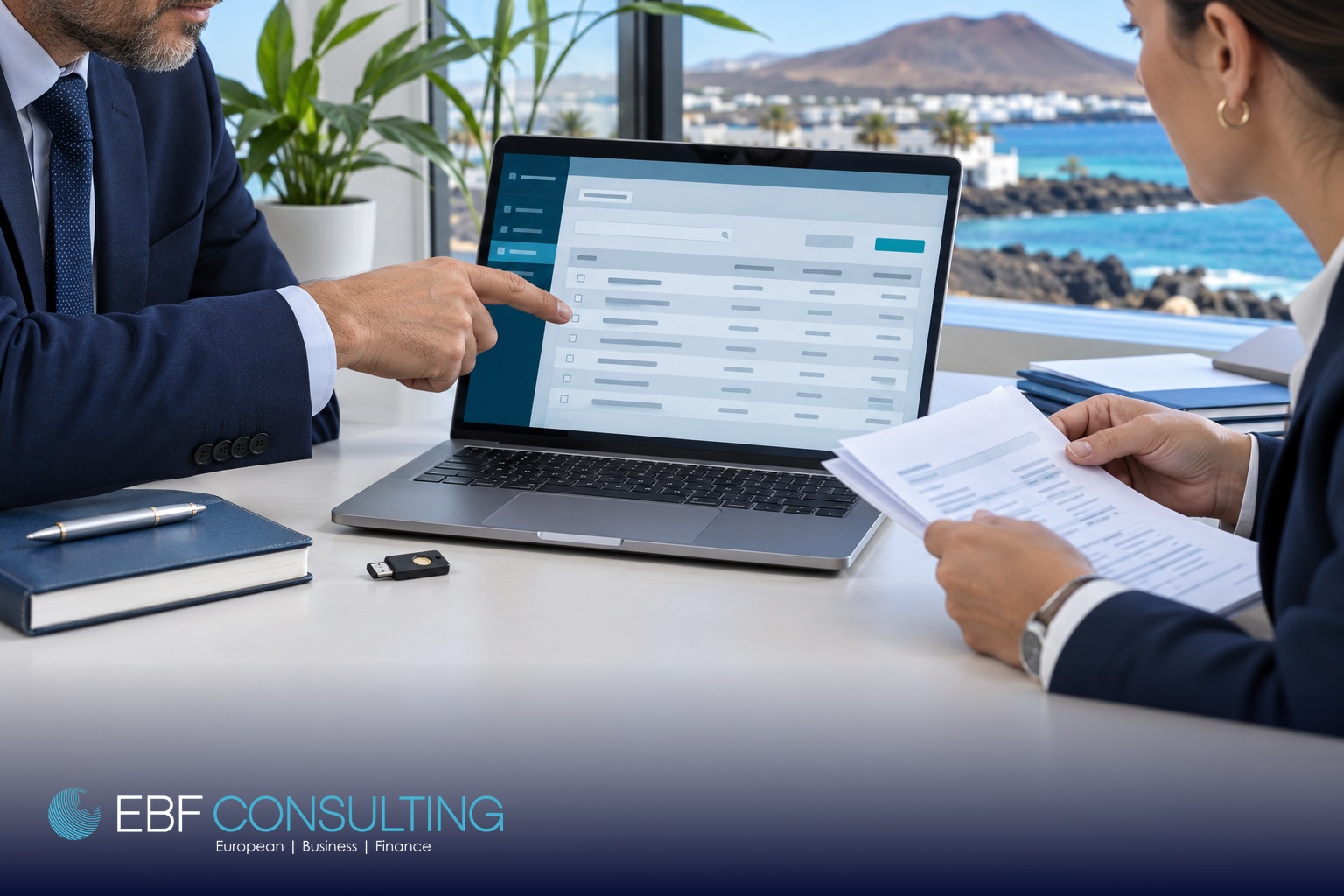
Picture a tax inspector arriving at your office and asking for immediate access to your invoicing software, passwords included. Are they entitled to do that? Spain’s Supreme Court has just ruled on this question, and its answer matters to every business and self-employed professional who issues invoices using a computer system.
WHAT THE RULES SAY ABOUT INVOICING SOFTWARE
Royal Decree 1007/2023 of 5 December approved the regulation setting out the requirements that invoicing software used by businesses and professionals must meet. It is the legislation behind the system known as Verifactu, designed to ensure that invoicing records are complete, traceable and cannot be altered.
Article 14.1 of that regulation allows the Spanish tax authorities to attend the place where the invoicing system is located or used and to demand full and immediate access to the invoicing and event records (or their secure copies), as well as to download, copy and consult them in a readable format, obtaining, where necessary, the username, password and any other security key.
This provision was challenged on the grounds that a regulation could not govern entry into protected premises, nor allow passwords to be obtained without prior court authorisation.
WHAT THE SUPREME COURT HAS DECIDED
In Judgment 1225/2026 of 4 November, the Supreme Court dismissed the challenge and upheld Article 14.1. Its main reasoning rests on three points:
- Article 29 of the General Tax Act (Ley General Tributaria) empowers the regulation to set out how compliance by invoicing systems is to be checked.
- The provision does not encroach on the powers of the courts, because it refers back to the requirements and limits of the General Tax Act itself. Therefore, where an inspection involves entering constitutionally protected premises without consent, the court authorisation provided for in Article 113 of that Act is still required.
- There is no breach of the right to protection of one’s digital environment, because access and the obtaining of passwords are limited to invoicing records, not to everything held on the devices.
One nuance deserves emphasis: where court authorisation is needed, it is the judge who sets the terms of the entry and the documents that may be accessed. The judgment makes clear that the judge is not bound by what the tax authorities request and must weigh up whether the action is necessary, appropriate and proportionate.
WHAT THIS MEANS FOR YOUR BUSINESS
In practice, the ruling confirms that your invoicing records can be examined quickly and directly, but within limits. A few recommendations to help you prepare:
- Know exactly where your invoicing system “lives”: on an office computer, on your own server or in a provider’s cloud.
- Decide who holds the access credentials and who should deal with any visit from the tax authorities.
- Wherever possible, keep invoicing separate from other sensitive business information (emails, internal documents, client data), so that access limited to invoicing records does not spill over into everything else.
- Prepare a simple procedure: who to call, what documentation to ask the official for and how to keep a record of what is reviewed.
For small businesses and sole traders in Lanzarote who invoice from a single computer on their own premises, these points are especially relevant, as that one machine often handles both invoicing and day-to-day management.
TRANSPARENCY, YES; DEFENCELESSNESS, NO
The judgment strengthens the tax authorities’ powers to check invoicing software, but it also makes clear that safeguards exist and that access has limits. Being well organised is the best protection. If you would like to check whether your invoicing system and your working practices are ready for a possible inspection, EBF Consulting can help you do so.
Official reference: Judgment of the Spanish Supreme Court (Tribunal Supremo), Contentious-Administrative Chamber, no. 1225/2026 of 4 November 2026 (appeal no. 86/2024), on Article 14.1 of Royal Decree 1007/2023 of 5 December (Real Decreto 1007/2023, de 5 de diciembre), approving the Regulation on the requirements for invoicing software and systems used by businesses and professionals and the standardisation of invoicing record formats.